Credit for the post: Grant Schwartz
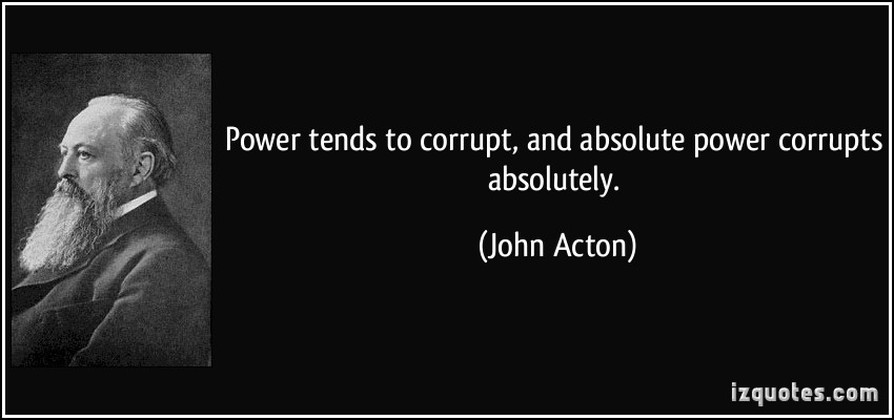
Grant’s blog post stood out to me because it tackled the thought of utopia among Urrasti and Anarresti societies in a unique way with a strong philosophical basis. Grant showcases the concepts of “power”, “corruption”, economic disparity as the main factors accounting as to why the two planets represent a critique on the concept of utopia, which is something that I never considered. Similar to the idea of superiority in human nature, Grant illustrates a scenario where the concept of utopia cannot exist in societies where humans will have power over others because power will eventually lead to the downfall of society.
————————————————————————————————————
Before the prompt, this is by far the best book I have read in a long time, and I am enjoying it greatly.
One of the best things this novel does is create a slight disconnect between the reality in the book and the reality that we live every day. Although earth is mentioned in the book as Terrans, it is very clear that although there are humans and rats and water, and many other things that are on earth, Urras and Anarres are most certainly not earth. Urras is very similar to earth in many ways though. A-io, the politically strongest, is a democracy built entirely on capitalism, and has existed as such for over 800 years as far as I can tell. It could easily be compared to the United States of America, which is obviously what Le Guin was going for, although it is a highly dramatized and over exaggerated version of the USA. The wealthy are incredibly wealthy, and the poor are incredibly poor, with the classes rarely mingling or intertwining. It is so separate that Shevek doesn’t meet the poor until the 9th chapter, where all hell breaks loose. Thu is another country, one that in the 1970’s could be compared to russia, but now fits the description of China even more than it did of Russia in the past. It is a socialist society with an overarching dictatorship that controls the people, at least that is how Shevek described it in the 3rd or 5th chapter. There are other countries that are not as big, such as Benbili, but these countries all take the background to the two main ones, who use these smaller countries as a battleground in their never ending war. This is obviously a commentary on the Cold War, and how this “new” form of war was even worse than the old one: instead of going out and defending their own countries or states, they are defending an idea that their government has, which has no personal bearing on their own lives. Anarres is this safe haven, where there is no government, no people grasping for power, no poor, no rich, only humans. All the people have there are other people, and they use this gift to great effect. Everyone is a social being, who finds that work satisfies them, and finds pleasure in what they do. This would be an ideal society, except for the fact that they do not have many of the luxuries that even the poor on Urras have, such as unlimited drinking water, property of any kind, or enough food to go around.
The first social critique actually comes in chapter 6 in the form of the character Bedap, who realizes in their Odonian society where no one has power, there is actually power in the masses in the form of not being willing to change or evolve. This is seen in the way that Shevek’s physics work, which is instrumental and important to advance space flight and communications, is not published because there is no actual need for it. In this event we can also see that there actually are individuals with power, such as Sabul, who if they wished it, could simply say no, and nothing would happen. The defense force is also similar in this matter, as they chose what left and came into the planet, which is in itself a very powerful responsibility.
In chapter 9, Shevek finally decides that he is done being used by the A-Io government, and finally wants to go on his own and do what he came to do, try and open up communications between Urras and Anarres, as well as help the Urrasians understand the benefits of Odonian culture, and help them adopt it. He leaves the university and within 3 days is pretty much leading a peaceful revolution with the masses of poor in the main city of the A-Io, but it is here where we see what is supposed to be the massive difference between the A-Io and the US. After Shevek finishes his speech, army helicopters come and start to shoot on mass at their own people. The disconnect between poor and rich in this society is so great that the rich see the poor only as a vessel to increase their own massive wealth, and if they are misbehaving, simply killing them is a better option than putting up with them. This concept is alluded to in the first chapter, when the doctor on the ship throws Shevek’s pajamas in the trash. When asked by Shevek about this, the doctor simply says, “Oh, those are cheap pajamas, service issue – wear ‘em and throw ‘em away, it costs less than cleaning.” This one sentence is the perfect metaphor for what happens in the ninth chapter: in the eyes of the rich and powerful, the poor common folk are all cheap and replaceable, and once they have served their purpose, they can simply be thrown away and replaced with new ones. This is a massive critique on the army and war itself, as well as those who grasp for power and how the life of one person is not worth the lives of others.
I think the main point of what we have read so far is that guns, bombs and missiles are not the most potent weapons, the people that wield them are, and the power that they have trumps all. It is simply power, and power hungry individuals, who are the ones that mess up society. Those who only care about what they can do to further themselves and their clench on those around them. In a capitalist society, becoming more powerful is encouraged more than any other political philosophies, and because of this it is these capitalist societies that commit the greatest atrocities. Germany in fiscal despair turned to the person who took the blame off of themselves and put it on someone else, promising economic prosperity in the process, and gaining the support of millions for a terrible cause. The other countries all wanted to maintain their own power at the same time, and killed millions of people in the process, creating a weapon that could wipe out hundreds of thousands in the span of seconds. Then after this horrific world war, the big countries did their best not to fight each other, but instead used other smaller countries as tiny battlezones in their 50 year war. The statement that one country was a democratic-republic or a communist society was seen as a victory for these countries that could no longer simply take them over without severe consequences. This book says that with power comes corruption, and with corruption comes societal downfall. And i’m pretty inclined to agree.