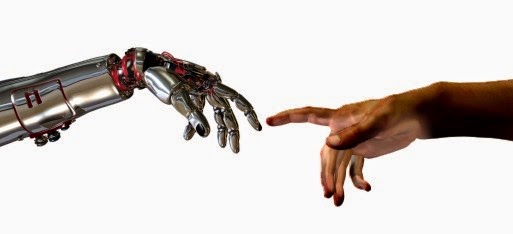
“Empathy, evidently, existed only within the human community, whereas intelligence to some degree could be found throughout every phylum and order including the arachnida.” (Dick 29)
This quote was said in the context of when Rick Deckard was wondering why Androids and other animals were unable to feel empathy. Empathy is a significant theme throughout the book, and this quote is significant in the fact that it makes this distinction between Androids, animals, and humans. In a world where humans and androids co-exist, what makes someone human? What does it mean to be human? One could say that being human is to have the capacity to think and make thoughtful decisions for yourself or to have the ability to communicate with words and expressions. This quote creates a clear distinction that empathy is a purely human emotion and humans are unique because they are the only creatures that can feel empathy towards other people and things. If empathy exists only in humans, then you could argue that empathy is the defining feature of humanity. That is, you have to have empathy to be human.
However, empathy is not only realistically a human trait, but it is also a trait shared by animals. Animals are able to feel empathy in multiple situations like when you’re feeling sad your dog will feel that you are sad and come to comfort you, or even when they can empathize with the pain felt by other animals by assisting them. Realistically, empathy is not an exclusively human trait. However, the human level of cognition and the ability to feel emotion far surpasses that of animals, so humans are able to feel empathy in a more complex way than animals. The fact that humans are the only creatures that are able to feel such a complex form of cognitive empathy also creates some form of societal hierarchy by the author where the human population as a whole can be considered superior to animals and androids. For example, humans have historically only raised animals for a multitude of reasons: for social status, to acquire self-worth, or as a source of food. However, the relationship between androids and humans is completely defined by empathy. Androids are completely the same as humans except for the fact that they can’t feel empathy at all, which makes them susceptible to “empathy tests”. This becomes the only way that androids and humans can be separated throughout the book. This shows that androids in Dick’s novel possess absolutely no cognitive empathy which ultimately separates the concept of a human and the concept of an android throughout the novel.
At the same time, Deckard continues to think about spiders and other predatory animals and realizes that being able to empathize would only lead to starvation since they would identify with their prey. As his thoughts progress, Deckard realized that empathy occurred only in herd animals, such as omnivores and herbivores with a clear group instinct, because it would enhance, rather than impede, their chance of survival. Deckard concludes that androids are “a solitary predator” that lack the ability to empathize which makes killing, or retiring, androids easier to do. However, Deckard’s struggle to grasp his own empathy can pose the question of whether he is really human. Even if androids do not possess the cognitive empathy abilities of a human, why does Deckard feel compelled to kill them? Unlike predatory animals, Deckard has the ability to empathize with the situations of others and he certainly does need to kill androids to survive. Does not having the ability to empathize with others make androids that much lower than humans that it would be ok for anyone to just kill them without remorse? Is it not the same as taking a human life? This novel draws a very compelling and interesting distinction between androids and humans, but does not define itself completely. It makes you wonder what it really means to be human and the value of human life, which have always been very hard-hitting philosophical questions. Empathy, throughout the story, can be seen as one of the only recurring themes of the book that is brought to question due to the distinctions that it makes, and the questions that it creates for the reader.
Works Cited:
- Dick, Philip K. Do Androids Dream of Electric Sheep? London: Gollancz, 2011. Print.